A noisy garage door is more than a nuisance. It wakes the house at 5:30 a.m., rattles conversations, and shatters the calm of a quiet neighborhood. For homeowners in Belmont and surrounding towns, the sound is often the first sign that something needs attention. I’ve fixed hundreds of these problems on-site as a technician for Monacco Garage Door Services. The fixes range from a single loose bolt to a full system upgrade. What follows is practical, experience-driven advice you can use today to reduce noise, protect your door, and decide when to call a pro.
Why quiet doors matter Noise means movement and friction. Those are the enemies of a long-lived garage door system. A squeal or clank usually signals wear on rollers, strain in the springs, or poor alignment. Ignored, those sounds escalate into part failure and safety hazards. Quieting a garage door not only improves daily life, it reduces maintenance costs and extends component life by months or years. For families with early-shift workers, newborns, or people working from home, this has immediate value. For sellers preparing a home, a quiet, smooth-operating door can affect perception, even offers.
Common sources of noise and what each sound typically means Squeaks and chirps: usually rollers and hinges lacking lubrication or rollers that are dry, cracked, or worn. Metal rollers without bearings make a high-pitched whine when they run along metal tracks.
Clunks and bangs: often loose hardware or worn torsion springs. If the garage door slams into the stop or the opener struggles near the travel endpoints, vibration transfers into the building structure, producing low-frequency bangs.
Grinding or scraping: indicates misaligned tracks, a bent roller, or foreign debris caught in the track. When metal meets metal without a smooth interface, the sound follows.
Rattles during travel: typically loose bolts on brackets, hinges, or the opener itself. Sometimes the weatherstripping or a loose panel will vibrate against wood framing and create broad-band rattling.
High-pitched whining from the opener: the motor or gear assembly may be wearing, especially in older chain-drive openers. Belt-drive units tend to be quieter but will still hum when under strain.
What to inspect first, with confidence Start where simple things make the biggest difference. I teach new technicians to approach a noisy door with a flashlight, gloves, and a notepad. Work from the ground up: hardware, rollers, tracks, springs, panels, and finally the opener. Note two or three distinct noises, then isolate each by manually moving the door a few inches and listening.
Check hardware tightness. Vibration loosens nuts and bolts in obvious places: hinge screws, roller brackets, and the bottom bracket. Tighten with the correct size socket or wrench, not an adjustable tool that can round the fastener. Be careful near springs and cables. Never adjust high-tension components yourself. Those are for professionals.
Inspect rollers. Nylon rollers with ball bearings are quieter than stamped steel rollers. Look for chips, flat spots, or excessive wobble. If rollers have grease on the sidewalls only and spin freely, they may be fine; if they feel gritty or do not spin smoothly, replace them.
Look at the tracks. They should be plumb and parallel. Small dents can be carefully tapped out with a rubber mallet. If a track is significantly bent or belled, it needs replacement by a trained technician for safe re-alignment.
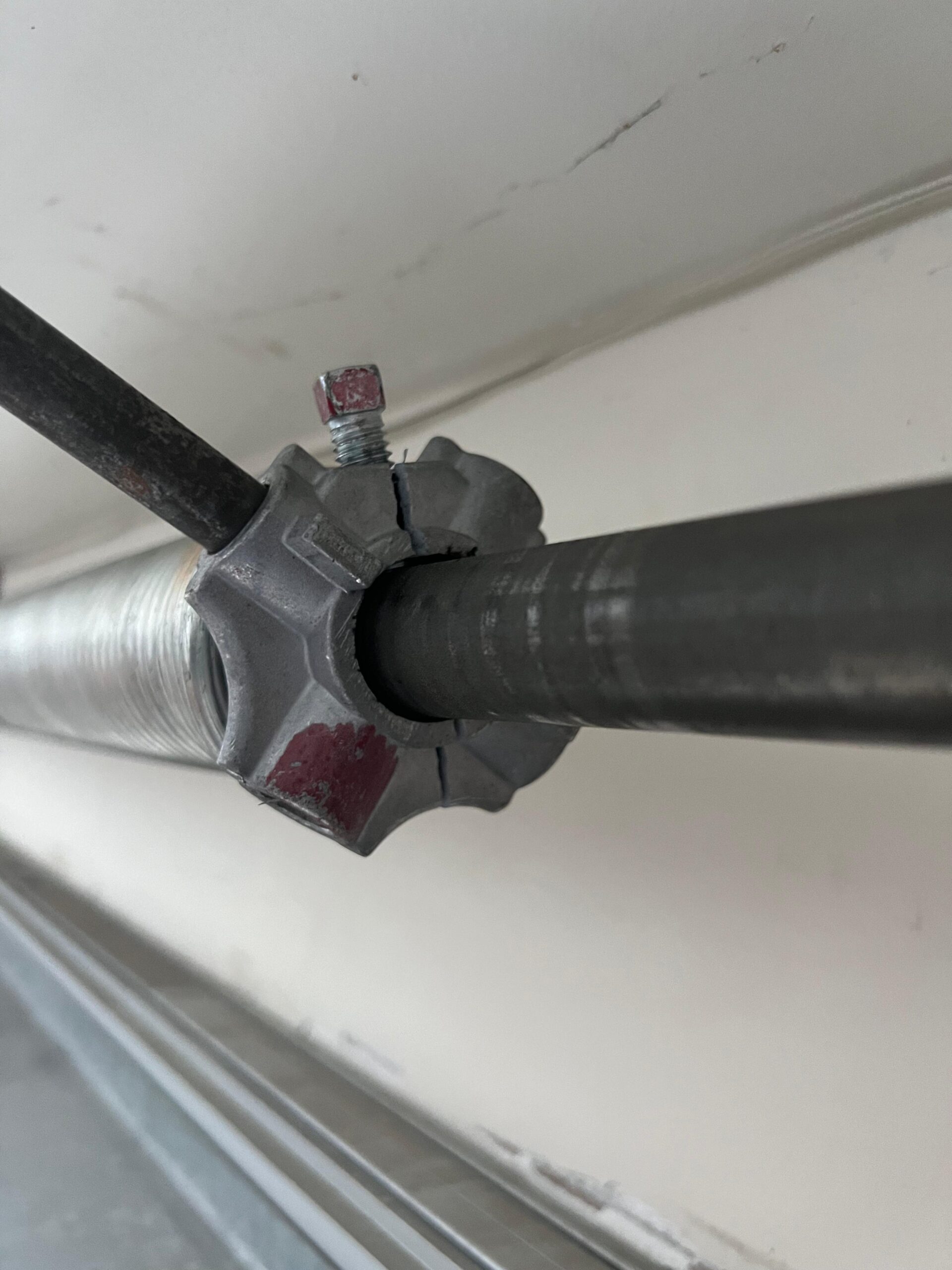
Examine the springs and cables. A spring that sings under load, or shows gaps in the coils, is near failure. Frayed cables are a safety hazard. Neither should be repaired by homeowners; call a qualified company. For homeowners in Belmont, Monacco Garage Door Services has performed thousands of safe spring replacements and will explain the risks plainly.
Lubrication: what to use, and what to avoid Lubrication is deceptively simple and widely mishandled. The wrong lubricant attracts grit, the wrong amount migrates into bearings, and the wrong type causes swelling in plastic components.
Use a silicone-based or white lithium grease for metal-to-metal contacts such as hinges and ball bearings. For rollers, use a light spray lubricant formulated for garage door components. Avoid heavy motor oil and household WD-40 for long-term lubrication. WD-40 is a solvent and temporary cleaner more than a lasting lubricant.
Apply sparingly. Excess grease runs into the tracks and binds. A single light squirt at pivot points, and a drop on each roller bearing, is sufficient. Wipe away visible excess after a cycle or two. Perform lubrication twice per year in temperate climates and more often if the door sees heavy use or coastal salt exposure.
Easy fixes you can do today If you want to quiet the door tonight without calling a technician, these actions solve many common complaints. The checklist below is safe for most homeowners and requires basic tools.
- tighten exposed nuts and bolts on hinges, roller brackets, and the bottom bracket, using the correct wrench or socket remove debris from the tracks and wipe them clean with a damp cloth, avoiding aggressive scraping apply a light silicone spray or white lithium grease to hinges and roller bearings, one application per point replace worn weatherstripping at the bottom of the door if it slaps during travel; newer strips cost about $20 to $60 depending on size test the opener's travel and force settings, reducing force slightly if the door closes too hard; consult the opener manual before making adjustments
These steps often reduce rattles and squeaks within minutes. If the door still sounds rough after these fixes, the problem likely involves springs, cables, or the opener gearing.
When the opener is the culprit Openers wear out over time. Chain-drive openers are robust and economical but noisy. Belt-drive openers are quieter and smoother but cost more upfront. Whether you choose repair or replacement depends on age, frequency of use, and the type of house. A 15-year-old chain-drive unit with a sagging rail and noisy sprocket will continue to cost in maintenance and will never match the quiet of a new belt-drive unit.
Listen to the sound to diagnose. A grinding inside the trolley or motor housing suggests internal gear wear. If the motor hums and the door moves sluggishly, bearings or motor brushes might be failing. Replacing worn gears in many modern openers is straightforward, but if the motor is failing, replacement is more cost-effective.
Consider the trade-offs. Replacing an opener costs somewhere between roughly $300 and $700 for mid-range belt models, plus installation. Labor and permit costs vary, but the new unit reduces noise significantly and offers smoother life-cycle maintenance. For customers who need the quietest operation, a belt-drive opener with a reinforced rail and soft start/soft stop features is the best investment.
Upgrades that reduce noise and improve reliability If you are tired of recurring fixes, investing in strategic upgrades reduces noise and maintenance in the long term. These three options consistently deliver the best value based on my field experience.
- swapping stamped steel rollers for sealed-bearing nylon rollers, which reduces vibration and often cuts noise by half upgrading from a chain-drive opener to a belt-drive opener with soft start and quiet belt, which eliminates much of the motor-related noise replacing aging torsion springs with a properly rated set, which restores balance and prevents strain on the opener and rollers
Each upgrade has a cost and benefit profile. Rollers are the most affordable immediate improvement and are often the first change recommended by Monacco Garage Door Services for Belmont homeowners. Opener replacement is pricier but solves noise at the source. Spring replacement is not a noise cure by itself, but it prevents the opener from overworking, which reduces long-term noise and risk.
Balancing cost, quiet, and safety Budget matters. Replacing every noisy part at once is not always necessary. A simple path for most homeowners is sequential: fix immediate safety issues first, then address rollers and hardware, and finally consider an opener upgrade if noise persists.
Here is a common approach I follow in service calls. If a door makes safety-critical noises like grinding, loose cables, or spring issues, handle those immediately. Next, if rollers are old metal types, replace them with sealed-bearing nylon rollers. Then lubricate and tighten hardware. If the door still produces significant noise or the homeowner wants noticeably quieter operation, recommend a belt-drive opener replacement.
On occasion, customers with historic or custom doors need different judgment. Heavier wooden doors make more noise simply because of mass and resonance. For those, adding insulation panels, upgrading to full-length weatherstripping, and using heavy-duty rollers and a high-torque belt-drive opener calms the system without altering the door’s aesthetic.
When to call Monacco Garage Door Services or a qualified pro Some jobs are simply not homeowner tasks. Tension springs and cable anchor points store enough energy to cause severe injury if mishandled. Structural track realignment that involves removing the door or re-centering the torsion assembly requires special tools and permits in some municipalities.
Call for professional help when you observe any of the following: a broken spring, frayed cables, door imbalance when moving manually, a door that falls quickly when released, or motor smoke or burning smells. For residents in Belmont searching for a trustworthy partner, the name Monacco Garage Door Services comes up regularly. We prioritize written estimates, transparent pricing, and safe spring work. A trained technician will evaluate balance, measure spring rates, and check opener force settings, documenting what needs https://s3.us-east-1.amazonaws.com/garage-door-company-belmont-ma/garage-door-supplier/how-garage-door-company-belmont-ma-handles-garage-door-extensions.html attention.
A few lived-experience anecdotes I remember a winter call in Belmont where a homeowner complained about a terminally noisy garage door waking the household at night. The door had chain-drive opener, old steel rollers, and loose bottom brackets. We replaced the rollers with sealed nylon bearings, tightened all hardware, lubricated hinge points, and reset the opener limits. The result was a door that moved in near silence and saved the homeowner two expensive service calls that winter.
On a different job, a young family that worked night shifts wanted absolute quiet. The door was wooden and heavy. We added full-length bulb vinyl weatherstripping, swapped the rollers for heavy-duty nylon bearing rollers rated for the door weight, and installed a belt-drive opener with a soft start and slow decay stop. That combination removed the majority of the noise while preserving the door's traditional look.
Maintenance plan that keeps doors quiet Regular maintenance is the best defense. Twice-yearly checkups reduce surprises and keep costs predictable. A simple maintenance plan you can follow: inspect hardware, lubricate bearings and hinges, check balance and safety reversal, and visually inspect springs and cables. If you prefer a hands-off approach, schedule an annual professional tune-up. For many households in Belmont, an annual visit from Monacco Garage Door Services includes lubrication, balance testing, safety checks, and a written list of recommended repairs.
Numbers and realistic expectations Expect to spend roughly $100 to $300 if your issue is primarily hardware and rollers. Rollers typically cost $8 to $30 each depending on material and bearing type. Expect $300 to $700 for a quality belt-drive opener installed professionally. Spring replacement ranges from around $150 to $350 depending on the type and whether both springs are changed. These numbers vary by market, but they represent realistic ballpark figures. The cost of ignoring noise can be higher: unbalanced doors cause premature opener wear, which leads to replacement sooner than expected.
Final persuasion: why choose quiet now Quiet is not a luxury for most families. It is an efficiency upgrade with immediate quality-of-life returns and long-term savings. The smallest changes often have outsized impact: one set of sealed rollers, a careful lubrication, and a tightened bracket can turn a nightly racket into a nearly silent glide. For problems involving springs, cables, or motor failure, fast professional intervention prevents injury and larger repair bills. If you live in Belmont and seek a team that understands the local housing stock and common seasonal issues, Monacco Garage Door Services stands ready to assess noise, recommend the least invasive fixes first, and provide clear pricing for upgrades that deliver lasting silence.
Monacco Garage Door Services
687 Belmont St Unit A, Belmont, MA 02478
+1 (617) 927-9512
[email protected]
Website: https://monaccogaragedoorservice.com/